
Ball Python Breeding Genetic Defects
Ball Python Breeding Considerations and Known Issues
Explore this detailed manual on specific morphs and pairings linked to ball python breeding genetic defects, including fertility issues and structural or neurological concerns.
Note: These insights stem from shared community data and hobbyist observations. Variability exists among individual snakes. This summary serves as a starting point rather than a final ruling. Always consult with experienced breeders, keepers, and qualified exotic veterinarians.
Homozygous Lethal Combinations
These combinations are non‑viable when an animal inherits two copies of the relevant gene. Offspring in the homozygous state do not survive (typically resorbed in‑utero or dying shortly after hatching).
Super Spider – Homozygous Spider is considered lethal. Spider is always carried as a single copy.
Super Champagne – Homozygous Champagne is considered lethal. Champagne is always carried as a single copy.
Super HG Woma (Pearl) – Homozygous HG Woma is considered lethal. It is always treated as a single‑copy hidden gene.


Super Champagne Ball Python Photo Dave Green
Super Spider Ball Python Photo Bush League
Desert Females
Desert females are widely reported to have significant reproductive issues and often do not breed or lay viable eggs like typical Ball Pythons. Males from this line are generally considered unaffected.
Caramel / Caramel Albinos
Caramel lines have been associated with an increased risk of kinking (spinal deformity) and other structural issues. The risk is present even in single‑copy Caramel animals, though it is more frequently observed in certain lines and higher‑density projects. Caramel Albino females have been reported to show reduced viable egg counts and subfertility.

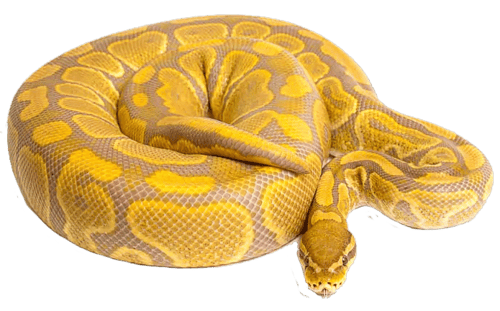
DESERT Ball Python Photo Ken Macek
Caramel Albino Photo Markus Jane
Spider and Wobble‑Associated Morphs
Spider Ball Pythons and several related morphs (and combinations involving breeding them) are known for a characteristic genetic defects such as, head wobble of varying severity. While some individuals function well, others may have feeding difficulties, poor coordination, or reduced quality of life.
Compounding Combinations
These pairings are often avoided due to concern about stacking or compounding known issues:
Spider × Caramel (e.g., Bumblebee / Killerbee) – Combines the Spider wobble risk with the Caramel kinking risk.
Spider × Sable – Often avoided due to concern about compounding neurological issues.
Spider × Champagne – Avoided by many breeders for similar stacking concerns.
Spider × Woma – Combines two wobble‑associated traits in one animal.
Scientific backing for Spider wobble – A 2022 peer-reviewed CT/MRI study (Schrenk et al., Journal of Exotic Pet Medicine) confirmed distinctive inner ear / statoacoustic malformations in spider morphs as the structural basis for wobble, moving it beyond anecdotal reporting.
While all spiders carry the wobble trait, severity ranges from nearly imperceptible to significantly impairing. Most individuals function normally with only subtle signs, but a small percentage experience severe wobble that affects feeding, coordination, and quality of life. Severity cannot be reliably predicted from parents to offspring.


Caramel Albino Spider Ball Python Photo Markus Jane
SPIDER WOMA Ball Python Photo NERD
Sable and Sable Combinations
Sable – May show varying degrees of wobble or other neurological signs.
Super Sable – Reported to have higher rates of developmental problems and failure to thrive.
Sable × Spider – See Spider section above regarding compounding neurological traits.
Spotnose and Super Spotnose
Spotnose is generally considered workable in many projects, but some Super Spotnose animals have been reported with more pronounced neurological or structural concerns. Caution is advised when planning pairings that produce supers.

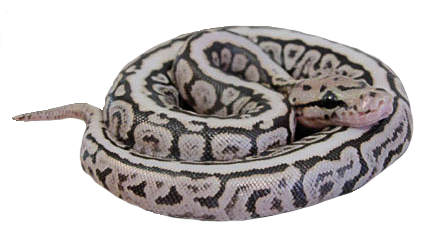
Super Sable Ball Python by Gregory Exotics
SUPER SPOTNOSE Ball Python Photo VPI
Woma and Related Lines
Woma – May display a wobble similar to other morphs associated with neurological traits.
Super HG Woma (Pearl) combinations – Super HG Woma (Pearl) combinations – Visually striking animals, but many breeders report significant neurological issues and consider them poor candidates for long‑term breeding projects.
Woma × Spider – See Spider section above.

PEARL BALL PYTHON Photo NERD

Woma ball Python Photo NERD
Cinnamon / Black Pastel Supers and 8‑Balls
Super Cinnamon – Prone to pinched faces, spinal deformities, and other congenital defects at birth.
Super Black Pastel – Similar structural concerns have been reported.
8‑Ball (Cinnamon × Black Pastel) – Even with one copy of each gene, commonly reported with duckbill (flattened, upturned snout) and kinking. Often cited as the most frequently encountered of the three in the hobby.


Super Cinnamon Ball Python Photo Morph King
Super Black Pastel Ball Python Photo Unknown
Champagne Combinations
Champagne bred to certain morphs has produced offspring that fail to thrive or show severe wobble. Examples include Champagne × Spider and Champagne × Woma, which many breeders avoid due to concern about stacking neurological traits and the possibility of being lethal. Champagne × Hidden Gene Woma (HGW) – This is the pairing most specifically listed as lethal.

CHAMPAGNE SPIDER Ball Python Photo MIke Keist
Blue‑Eyed Leucistic (BEL) Complex
Super Lesser / Super Butter / Lesser × Butter – “Bug eyes” (enlarged, protruding globes) in a significant percentage of animals. These may be more prone to corneal trauma and chronic eye issues.
Mojave distinction in the BEL complex (Super Mojave / Mojave × Lesser / Mojave × Butter don't share the same bug-eye issue). Breeding with Mojave or Het Russo parents is often recommended to avoid this trait while still producing BELs.
BEL Complex × Piebald – Microphthalmia (abnormally small or absent eyes) has been reported. This is a separate issue from the bug‑eye concern above.


Super Lesser Ball Python Photo Ralph Davis
Super Butter Ball Python Photo Unknown
Super Stripe × Ivory
Some breeders report difficulty achieving good fertility and consistently healthy offspring from Super Stripe × Ivory pairings. Results may vary, and careful evaluation of hatchlings is recommended.


Super Stripe Ball Python Photo JKR Reptiles
Ivory Ball Python Photo Living Art Reptiles
Other Considerations
Super Blackhead – Some anecdotal reports of wobble in the super form, though this is less well‑established than the issues above.
Scaleless – Not a neurological or structural defect in the same sense, but a known husbandry challenge (skin integrity, dysecdysis, thermal burn risk) that some breeders flag as a serious consideration.
Albino-complex light sensitivity – Not a neurological or structural defect. Albino morphs have reduced ocular melanin, which can increase light sensitivity. In practice, this is rarely an issue at typical enclosure lighting levels, but providing adequate shaded hides and avoiding direct bright light is a reasonable precaution.


Scaleless Ball Python Photo Aaron Jones
Super Black Head Ball Python Photo Ralph Davis
Incubation temperature as a confounding factor. Some deformities (kinking, missing eyes) can be caused by incubation temperature spikes above ~92°F rather than being purely genetic. It's worth noting this distinction so hatchling evaluations don't misattribute incubation errors to morph genetics.

Note:
Information compiled from breeder community reports and observations. Not a substitute for individual animal evaluation or veterinary advice.
This list is not complete. It reflects issues commonly reported by breeders at the time of writing. Always research current information and consult experienced breeders, keepers, and qualified exotic veterinarians before planning pairings.
Inclusion or omission of any morph here does not guarantee health or problems. Outcomes can vary between lines, individual animals, and husbandry practices.
We hope this information helps new keepers and breeders make informed, ethical pairing choices avoiding Ball Python breeding genetic defects whenever possible.. Thank you for your time. Best of luck,
Living Art Reptiles™.
Source Information: Living Art Reptiles, Kevin McCurley (NERD), Schrenk, J. et al. (2022), Rose, K. & Williams, T. (2014), and information from community and academic resources.
Photos: Living Art Reptiles, Ralph Davis, NERD, Morph King, VPI, Markus Jane, Ken Macek, Dave Green, Aaron Jones, JKR Reptiles, Mike Kiest, Gegory Exotics, & Bush League.
Experience Living Art!
Design 1988-2026, Living Art Reptiles™, Content 1988-2026 Living Art Reptiles™; Unless otherwise stated.